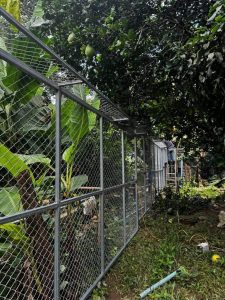
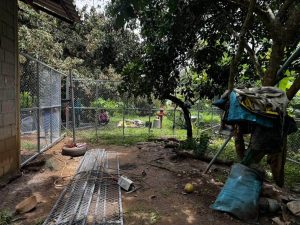
 We rarely go a day without seeing a dog on a chain or confined in a cage. In Thailand, this is very common and often considered responsible pet ownership, especially compared to letting dogs roam freely and risk chasing chickens or motorbikes.
We regularly share a Thai-language poster on social media to gently raise awareness: if a dog must be chained, it should still be given time off the chain to sniff, relieve itself, and exercise. While many people wish all dogs could live unrestrained, the reality is more complicated. Building secure fences or large enclosures is expensive, and there are often other pressures at play, such as neighbors insisting the dog be contained due to past incidents. For many owners, the cost of proper fencing simply isn’t feasible.
It’s easy to assume there’s a quick fix, but that often comes from a place of privilege. There isn’t always a simple solution. However, there are affordable ways to improve a dog’s quality of life: garden lines, longer chains, shaded areas, small pools, and similar upgrades can make a meaningful difference.
If you come across a dog in these conditions and want to help, approach the situation thoughtfully. It’s essential to have someone who speaks Thai fluently with you – translation apps or basic language skills can come across as blunt or judgmental and may do more harm than good.
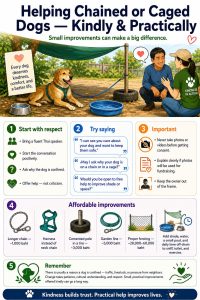
Start the conversation positively. Acknowledge what the owner is doing right and try to understand their perspective. If someone came to your home and criticized how you cared for your dog, it would likely feel confrontational rather than motivating. A gentler approach is far more effective. For example:
- “I can see you care about your dog and want to keep them safe.”
- “May I ask why your dog is on a chain or in a cage?”
There is almost always a reason—fear of traffic accidents, past incidents with livestock, or problems with other animals. Once you understand the situation, you can offer help respectfully and with permission.
A typical conversation might look like this:
- “Your dogs are beautiful—I can see you care about them.”
- “Are they kept like this for safety? Has something happened before?”
- “I’m part of a group that helps improve dogs’ living conditions.”
- “We recently received some donated materials, and I’d love to use them to help your dog—maybe by creating more shade or space.”
- “Would you be open to that? It would be completely free.”
At that point, you can show examples of previous work to build trust.
Never take photos or videos before having this conversation and getting consent. Doing so can make owners feel judged and defensive, and they may refuse help. Only document the situation after permission is granted, and explain clearly if the photos will be used for fundraising—always keeping the owner out of the frame.
Some practical, lower-cost alternatives to short chains or constant confinement include:
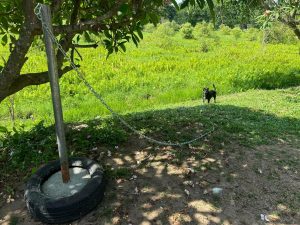
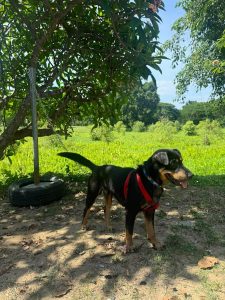
- Cemented pole in a tire (movable anchor point with a longer chain): ~3,000 baht
- Garden lines: ~5,000 baht
- Proper fencing: ~20,000–60,000 baht
- Longer chains: ~1,000 baht
Many dogs are tethered by a chain attached to a fixed structure, often around their neck. Simply switching to a well-fitted harness can significantly improve their comfort and well-being.
Change in these situations takes patience, cultural understanding, and respect. Small, practical improvements—offered kindly—can go a long way.